Impractical Distillers: Vol 2.5
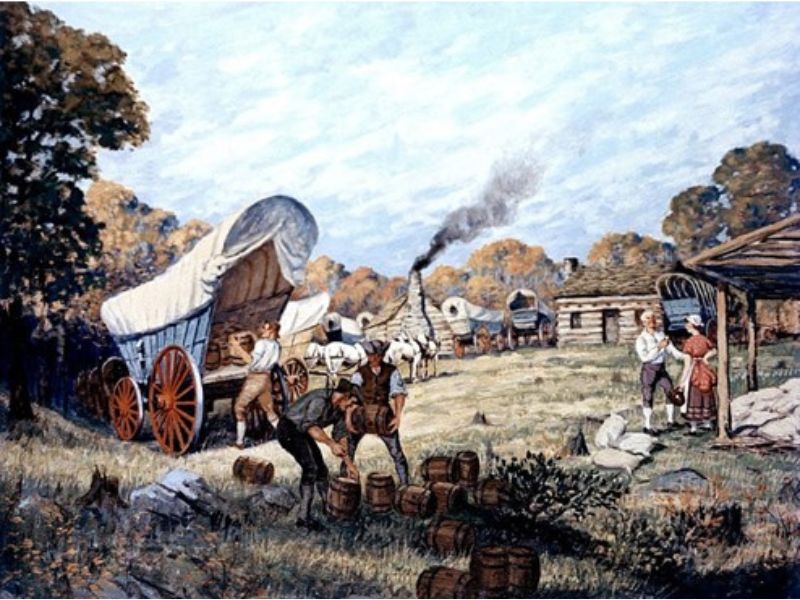
 The Eichelberger ledgers from the early 19th century have provided valuable insights into tavern, agricultural and distilling activities. Yet another aspect of the family’s entrepreneurial endeavors was the wagoning business. Dillsburg, like many other Pennsylvania agricultural communities of the time, was home to small scale, diversified farmers who successfully distilled subsistence crops like grain into a more profitable product - whiskey. Whiskey was a reliable, additional income stream. But these small farm distillers were limited to local markets.
In 1800, Leonard Eichleberger changed that disadvantage. He was a tavern keeper and distiller, but he also had a wheelwright shop and built wagons.
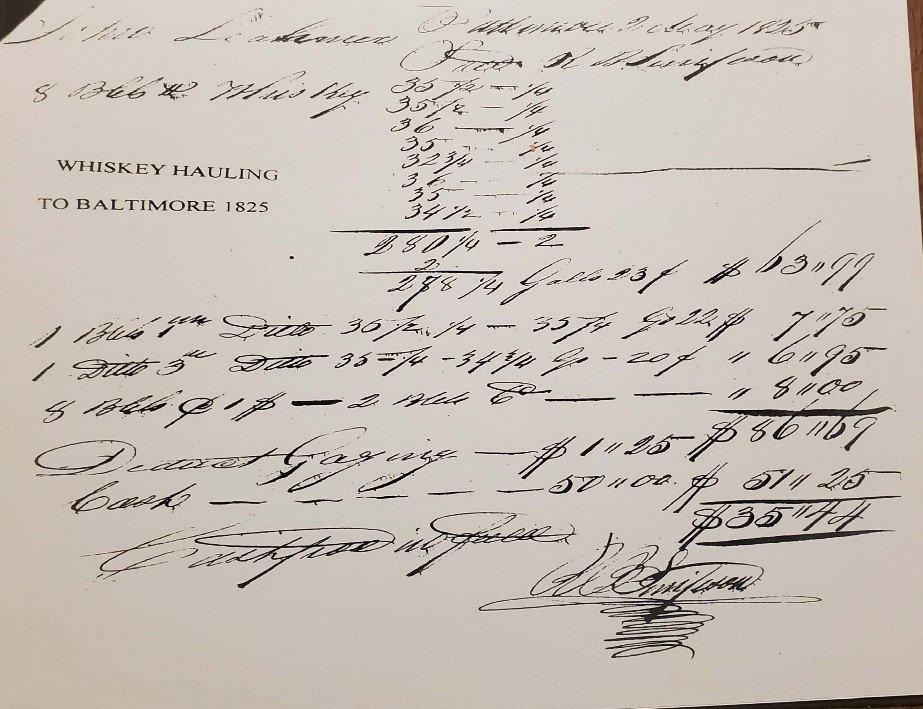 Most of the freight hauled in those wagons was whiskey. Baltimore became a frequent destination and a new thirsty regional market for local distillers. Eichelberger not only transported his whiskey, but hauled spirits made by other neighboring distillers. In documents recently discovered are receipts of some of the transactions dated: 18 December 1824, 14 February 1825, and 2 May 1825 (pictured). John Wolford had a distillery on Franklin Church Road. Others listed were John Lehman, John Stitzel, and W. Logan. The amount of whiskey varied from 4 barrels to 22 barrels. Four of the loads were 10-11 barrels with an average volume of 34 gallons. A 20-barrel load would weigh approximately 7,000 lbs.
Conestoga wagons drawn by horses and laden with whiskey traveled 80 miles in about 8 days. Once in Baltimore, the whiskey was” gauged” or proofed by buyers.
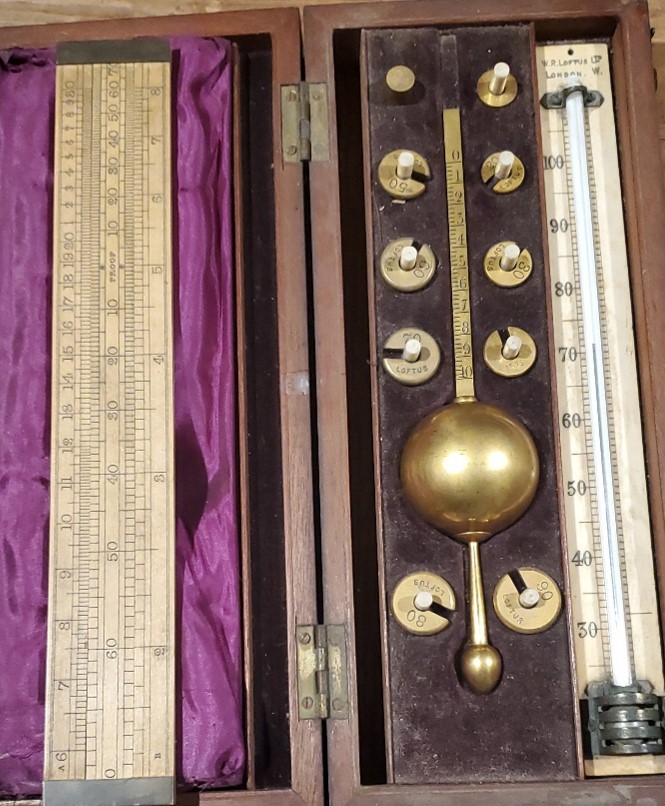 Gauging required the use of an early style hydrometer like a Dicas or Sikes (pictured). Whiskey at 100 proof brought 23 cents a gallon. Under 100 proof resulted in a lower amount paid. A dollar was added to the purchase price to cover the cost of the wooden barrel used to hold the whiskey.
One item missing from the receipts is taxes. A whiskey tax was imposed in 1791. That led to the Whiskey Rebellion in 1794. The tax was discontinued during the Jefferson administration and not re-instated until the Civil War.
Eichelberger wagons delivered local whiskey to the busy port of Baltimore which previously had been a market too distant for small farm distillers to reach. Return trips brought back mercantile goods and commodities including oysters! The financial network of local distillers and whiskey merchants in Baltimore is a fine example of the early agricultural entrepreneurship of the Northern York County region.
You can see the early American whiskey making process and taste “wagon-aged” whiskey at the Eichelberger Distillery during a tour or special event.
~The Impractical Distillers: Sam and Murray