Impractical Distillers: Vol 2.2
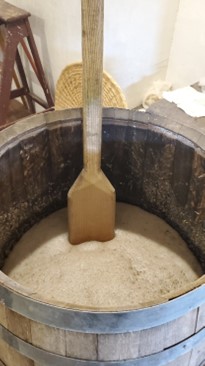
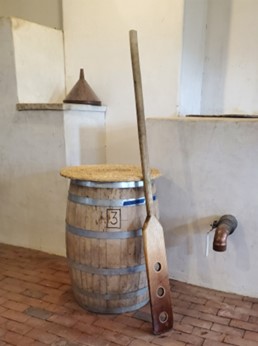 The Eichelberger Distillery began producing whiskey in May of 2024. Since then we have mashed nearly 90 times. Mashing is a process where hot water is added to grain to form an oatmeal like soup. The addition of water causes starch molecules in the grains to absorb water and swell. This process is called gelatinization. It also releases enzymes which cut long chains of starches into simple sugars. When the mash has cooled to under 90 degrees, yeast is added to start fermentation. Yeast metabolizes or “eats” simple sugars to produce carbon dioxide and alcohol. The fermentation process takes 3-5 days and produces a finished mash with a final “abv” or alcohol by volume of 5-8%. The next processes are stages of distillation to produce the final spirit. Sounds easy!
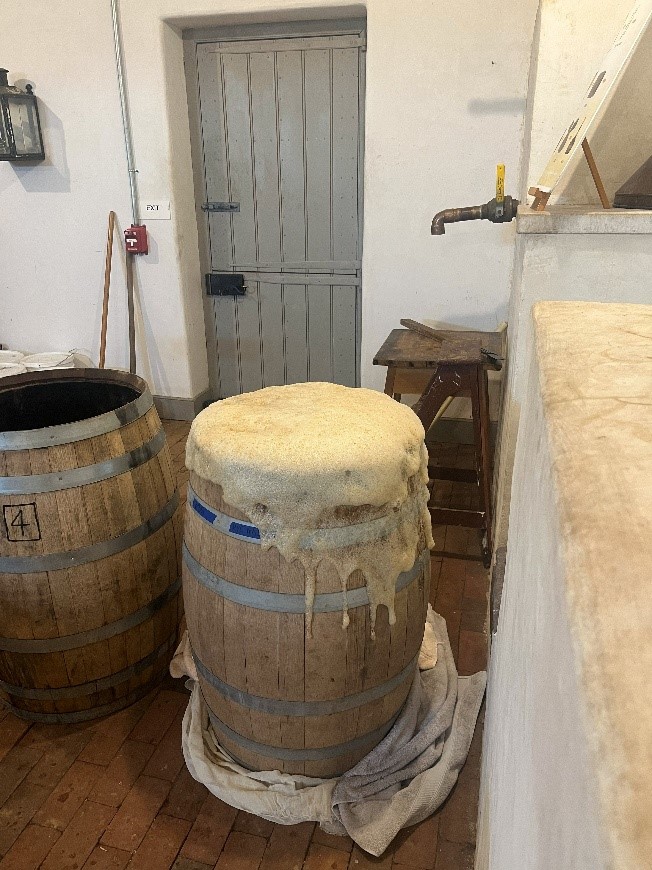
 The exact amount of corn (14 lbs), rye (28 lbs) and malted grain (8 lbs) are sequentially placed in a wooden barrel and mixed with measured volumes of hot water at specific intervals, then stirred and steeped for about 4 hours. What could go wrong? Actuall,y a lot of things could happen. With 90 mashes completed, there was variability from batch to batch. Some produced only 5% while others reached almost 10%. If a fermentation stalls, no alcohol is produced. A few even fermented violently, overflowing the barrel to form a large puddle on the floor. Typically, a grain cap forms on the top as the CO2 gases float the grain to the surface. During the 12 hours it takes for the mash to cool from 140 to below 90 degrees, Mother Nature gets her say and can play havoc with our plans. Bacteria and wild yeast floating around in the air of the distillery can descend into the mash. If wild yeast takes off it can inhibit the yeast we want to cause fermentation. Bacteria can also play a role which can be positive or negative on the final distilled product. Mostly we have been successful, but occasionally Mother Nature scoffs at those who would try to distill 18th century style without the environmental controls of modernity. She challenges us with extremely high temperatures and humidity, changing barometric pressures, and windy, cold conditions. Adding further challenges, we “sweeten” or clean the barrels with only boiling water and occasional ashes; no modern chemicals. Even a few bacteria between the staves or crevices of the wood can infect the mash. The Impractical Distillers have stared more than once into a barrel of weird smelling, strange foaming mash wondering what went wrong this time? Was it the moon?
 Despite the many challenges of Mother Nature, a long list of possible deterrents and maddening setbacks, the Impractical Distillers are determined to succeed. These same challenges were faced by “practical” Pennsylvania distillers of the 18th and early 19th century. By sticking to the techniques and technology of their time we learn just how much work (and a little luck) it took to produce successful mashes which led to remarkable spirits. Stop by the Eichelberger distillery to experience mashing, stripping, the finishing run and other aspects of 18th century distilling!
~The Impractical Distillers: Sam and Murray