
Dills Tavern: The Garden Shed: Vol 1.6
Assuming their gardens have good soil and proper nutrient, the two biggest problems gardeners face are fungi and insects. Fungi are likely to attack first with our current humidity and moderate night temperatures of 55 to 75 as this creates ideal conditions for fungal spores to germinate and spread. Then we'll take a look at the bad bugs that are coming to visit our gardens.
 Fungi Aren’t Fun Guys
Fungi thrive on energy absorbed from the plants on which they live. As a fungus grows, the plant withers. Plant fungi can quickly damage and even kill plants. Fungus spores attach to plant leaves having been spread by wind or insects. Other types live in the soil and can enter a plant through the roots or be splashed onto the plant by heavy water flows.
Preventing FungI
The first preventative measure is proper placement of plants to provide good airflow around each plant. Similarly, occasional pruning heavy foliage from plants provides good airflow within each plant's structure. Thirdly, assure each plant has sufficient sunlight to evaporate excess moisture from the leaves. Finally, use a proper watering method. The most important step you can take to reduce fungi in your garden is to Stop Overhead Watering. Instead, use a drip irrigation system or a watering wand to deliver water at a slow to moderate flow at ground level. If this isn’t possible, water your garden early in the morning when the sun’s rays will quickly dry your plants’ foliage. Late morning or afternoon overhead watering will likely "cook" your plants from the bright sun and higher temperatures. A final note on prevention is to never leave infected plant parts in the garden or in your compost, as this will only spread the fungus to other areas of your garden. Before applying any treatment remove infected leaves, or entire stems if many leaves along a stem are infected. Throw them in the trash.
The Main Culprits
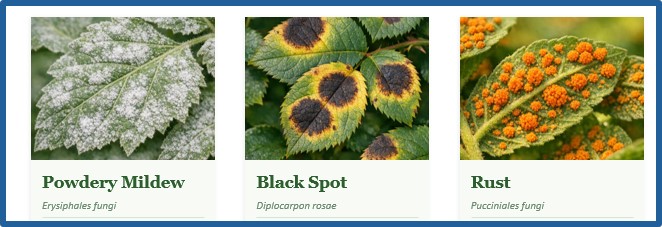
The fungi we are mostly confronted with in our gardens are:
- Black Spot on roses
- Rust Fungus on conifer trees, shrubs like hollyhock, and some flowers, including Aster, Carnation, Geranium, Iris, Lily, Pansy, Primrose, Snapdragon, Sunflower, Sweet pea, and their related family members.
- Powdery Mildew on a wide variety of plants.
Dealing With Black Spot
Black spot is typically a rose problem. It's just what it sounds like; black spots on the leaves and some stems. Unfortunately, I don't know of any natural cure for Black spot other than letting it die in your trash. Prune off all stems with spots or leaves that have developed spots. Throw them in the trash. Clean up all spotted stems and leaves that have fallen, and throw them in the trash, as well. If you have a bad infection your plant may look sparse for a while, but the new growth should be much healthier.
Preventing and Countering Rust Fungi
Like other fungal plant diseases, Rust fungi flourish in wet conditions. They can be spread by wind and by splashing from heavy water flows. A weekly application of sulfur can prevent and treat rust fungi. A dusting of powder seems to be more effective than the water dissolved spray. Neem oil, a botanical fungicide and pesticide, also controls rust. Neem oil, however, should not be used in hot weather. It leaves a film on the leaves that prevents the plant from breathing. In layman's terms, Neem oil will cause your plants to overheat and die back in the heat of summer (higher than 80 F). Even if you plant rust-resistant varieties, you must give them enough room to grow. Proper plant spacing increases air circulation which enables plants to dry more quickly after a rain. Overcrowding plants and dampness are the perfect conditions for many fungal diseases, as well as many insect pests to thrive. Some gardeners swear by baking soda sprays to control garden fungi, including rust. Baking soda, though, is a salt, and should be used in small amounts to protect both soil microbes and the plants themselves. Its efficacy can be enhanced by mixing it with a small amount of horticultural grade oil. At the bottom of this article is a natural do-it-yourself recipe for fungicide that is good for both Rust Fungi and Powdery Mildew, our next enemy to discuss.
Then There Was One - Powdery Mildew
Powdery mildew is one of the most common diseases to impact plants. It looks just like its name suggests. The leaves appear to have a greyish, powder on their surface. Conditions favoring it include high relative humidity remaining on the leaves at night, either from rain or watering, and temperatures of 55-75 . These conditions prevail in spring and autumn. The spores are carried by air currents, insects such as woolly aphids, and splashing water. Powdery mildew spores can overwinter in plant debris, making it important to clean loose debris out of the vegetable and herb gardens in autumn. Leave only the standing, hollow stems for predatory wasps, lady bugs, and some bees to make a home for winter. By covering the leaves powdery mildew inhibits photosynthesis. preventing the plant from developing the sugars it needs for good health and proper production. It may also affect the flavor of a plant's fruits, due to lower sugar contents. While almost no type of plant is immune to powdery mildew, certain species are more susceptible than others, including squash, cucumbers, tomatoes, and Monarda. The disease typically starts on the undersides of leaves, often appearing on the stems, flower buds, and even fruit. Although powdery mildew can infect a large variety of plants, each fungal infection is "host specific." That means the strain of fungus infecting a plant is specific to that kind of plant, so the powdery mildew on your lilacs will not spread to other kinds of plants in your garden. However, if not corrected it will happily and quickly travel to all plants within a particular kind, such as all the tomatoes, or all.
You Might Be Gettng Company You Don’t Like
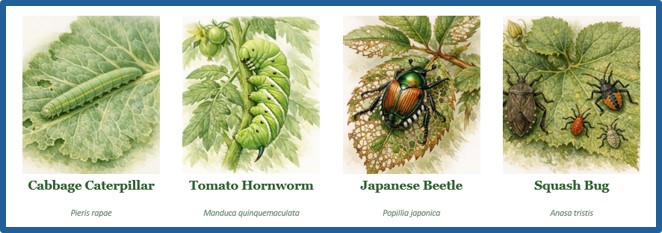
Whether flying or crawling there are dozens of insects that can render all your hard gardening work useless. It only takes a few cabbage caterpillars or tomato horn worms to destroy an entire mature plant in a day. Walk through your garden frequently and check for any bad bugs. Especially look on the underside of leaves and at the stem-to-leaf unions, as this is where most insects live and breed. If you find tiny egg clusters simply crush them, or pull that leave off and drop it in a pail of 1 part bleach and 9 parts water. Letting it sit for a day should kill whatever is inside the eggs. If you find caterpillars or bugs pick them off and drop them in the bleach water, as well. They will be killed almost immediately. If there are just too many to pick off the plants you will have to spray. Always spray insecticides later in the evening. Insecticides kill helpful insects along with the harmful ones, but friendly insects, such as bees, lady bugs, butterflies, and others, go to bed before dusk. Come home, eat dinner, relax a while, and then go spray your garden, provided it's not supposed to rain. Depending on the insect, the effects of the DIY insecticide formula at the bottom of this article can be almost immediate. On others it may take a few minutes.
Let’s Play Home Chemist
A few important notes apply to all fungicides and insecticides, including those super-duper, ready-made, expensive products from garden stores. As a preventative measure against fungi and insects, spray your plants every ten to fourteen days. If you already have a fungus or an insect infestation, spray every few days until the infection or infestation is corrected. Any spray will wash off during a rain or after a couple light rains or nights with heavy dew. Carefully watch the weather. If you just sprayed your plants in the last few days, and then it rained, you should spray them again as soon as their leaves are dry, regardless of the fungicide or insecticide you use. Always spray both the tops and bottoms of the leaves.
DYI Fungicides
- Milk can be used to both prevent and treat powdery mildew. Create a mixture of any fresh milk and water with 4 parts milk to 6 parts water. As a preventative apply this once every 7 to10 days. If mildew does form you can do this every 3 days until the disease is under control.
- Vinegar works as a general fungicide. The acetic acid in the vinegar changes the fungus's pH, which kills the disease. Mix 4 tablespoons of vinegar with one gallon of water to create a spray mixture. Spray both the tops and undersides of leaves every three days until the disease is under control.
- This following formula prevents and stops powdery mildew, and is generally effective on rust fungi.
Ingredients:
- 2 quarts warm water -- warming the water helps dissolve the ingredients, as well as evaporating chlorine from tap water.
- 2 Tablespoons baking soda -- natural fungicide, suppressing the growth and spread of fungus on leaves and fruits.
- 1 1/4 Tablespoons garlic powder -- natural fungicide because of its antibacterial and anti fungal properties. It's ingredients, such as allicin and sulfur, also serve as natural pesticides, while it protects plants from various fungal pathogens.
- 1 Tablespoon Castile soap, Murphy's oil soap or Mr. Bonner's liquid soap -- surfactants that help a solution adhere to the plant leaves. Caution: Do Not use a detergent, as this will strip the natural protection plants have.
Directions:
- To 1 quart of warm water add the garlic powder and baking soda. Stir vigorously for about 4 minutes. Let sit for 2 hours in a warm place for the ingredients to blend. After 2 hours strain through a cloth or coffee filter. Dilute with another quart of warm water.
- While the solution is resting for 2 hours, prune off any stems where the leaves show the yellow, red, or brown rust spots, or whose surface is covered more than 20% with the powdery mildew fungus.
- After straining the liquid add the liquid soap, and gently stir in.
- Pour the mix into your sprayer or a spray bottle. Spray both tops and bottoms of remaining leaves. Take special care when spraying lower leaves. Many mold spores live in the soil. If your spray is too strong, and splashes soil onto the leaves, you may be adding to your problem.
- After the initial application, apply every 3 days until the infection is under control. This may take a couple more applications. Then return to your preventative schedule of once every 10 days.
DYI Insecticides
Notice this formula is similar to the anti-fungus formula. There are differences, though, such as the amounts included, and the addition of vegetable oil as a suffocant. If you make both, clearly mark your jars and sprayers, so you don't get them mixed.
A few important thoughts apply to all insecticides, including those super-duper, expensive, ready-made products from garden stores. Typically, as a preventative measure against insects and fungus, you would spray your plants every ten to fourteen days. If you already have a fungus or an insect infestation, spray every few days until the infestation is corrected.
Any spray will wash off during a rain or after a couple light rains or several nights with heavy dew. Carefully watch the weather. If you just sprayed your plants in the last few days, and then it rained, you should spray them again as soon as their leaves are dry, regardless of the insecticide you use.
Spray both the top and bottom of the leaves. You should always water your garden at the ground level. You could water your garden, and then spray this solution on your plants, getting both tasks done on the same day.
With any insecticide, spray your plants later in the evening. Insecticides kill helpful insects along with the harmful ones. However, friendly insects, such as bees, lady bugs, butterflies, and others, go to bed before dusk. Come home, eat dinner, relax a while, and then go spray your garden, provided it's not supposed to rain. Depending on the insect, the effects of this spray can be almost immediate. On others it may take a few minutes.
Add ingredients in succession, mixing thoroughly before adding the next ingredient.
- Base - 1 quart filtered or distilled water. No need to mix. Duh!
- Defense Ingredient - 1 tablespoon Baking soda (sodium bicarbonate)
- Surfactant - 1 tablespoon Castile soap, Murphy's oil soap, or Mr Bonner's liquid soap. NEVER use a detergent.
- Suffocant - 2 tablespoons of any vegetable oil
Other than the Base, which is self-explanatory, let me explain why each of these is important.
Defense Ingredient - Baking Soda
Many soft body insects consume the baking soda as they feed on your plants. A chemical reaction occurs inside their bodies producing carbon dioxide. Carbon dioxide gas builds up in their system, which they are unable to pass off. This build up is fatal to them. Flying pests are generally repelled, because they can't find a place to land for a healthy meal for their young when the eggs hatch. Others ingest the baking soda when they chew or suck on a leaf. Baking soda also creates an inhospitable environment for fungal spores, and kills those that previously started their lives on your plants. Hard-body insects breath through membranes within their body joints. By drying out those membranes baking soda stops their respiratory systems from functioning. Also, their other bodily systems stop working without oxygen.
Surfactant - Castile Soap
A surfactant reduces the surface tension between the water and oil molecules, so they mix together more thoroughly. Castile soap is an all-natural soap without the added chemicals in hand soaps and dish liquids that some may recommend. Murphy's oil soap and Mr. Bonner's liquid soap are also good choices if you can't find Castile soap. The recommended amount does so without excessive foam or residue on your plants. Together, they allow an even spreading of the baking soda across the plant. Pests cannot avoid contact with the dissolved baking soda.
Suffocant - (Any) Vegetable Oil
In addition to holding the baking soda on the plants, vegetable oil will directly eliminate many insects. Soft body insects breathe through tiny holes in their exoskeleton called sphericals. The oil kills them by clogging those holes, and suffocating them.
Vegetable oil also deters fungal spores. It creates a slippery surface on which spores cannot grip. Some get knocked off the plant by the force of the spray action. Others die off, because they cannot settle into areas appropriate for the reproduction they require for continued life.
Commercial (but natural) Insecticides
Some people prefer manufactured insecticides. I suppose they think they're more effective because of more precise manufacturing processes. Some folks may think they won't do the DIY correctly. Whatever their reasoning, they tend to lean toward the items I mention below. I have used them all, and they all work well.
Pyrethrin and BT (Bacillus Thuringiensis) are used by many gardeners, depending on what is attacking their plants. Both are organic. There is a lot of crossover as to what insects they each kill, but having both assures you can eliminate all threats, including hard-body beetles or bugs and soft body caterpillars.
If you choose another insecticide be sure it includes Spinosad, which is sometimes a blend of Spinosyn A and Spinosad D. Otherwise it will only be mildly effective against a few insects. I have found Captain Jack's “Dead Bug” to be one of the most reliable.
Happy Mixing. Get ready, 'cause the critters are coming.
 The Colonial Farm
Early American farmers relied on observation, hard work, and natural materials to protect their gardens from pests and harmful fungi. To control insects, they often picked them off plants by hand, rotated crops, and planted different kinds of crops together to reduce infestations. They also used materials such as wood ash, lime, soot, and simple homemade washes to discourage pests. To deal with plant diseases and fungi, farmers spaced plants farther apart for better airflow, removed diseased leaves and stems, improved drainage, and burned infected debris to keep problems from spreading. Although they did not fully understand fungi in scientific terms, they learned through experience that careful timing, crop rotation, and good garden maintenance could reduce rot, mildew, and other plant diseases. Their methods were shaped by European traditions, Indigenous agricultural knowledge, and local trial and error, and they focused more on managing pests and disease than eliminating them completely.
Volunteers Welcome!
NYCHAPS (especially Gary!) is always looking for volunteers to assist with garden maintenance. Everything from planting, mulching, weeding, and learning/sharing your knowledge with others! Contact Gary Reneker at This email address is being protected from spambots. You need JavaScript enabled to view it.