
Dills Tavern: The Garden Shed: Vol 1.5
Shortly after the Medieval times (476-1486 AD) agrarians became more scientific in farming practices. They began noticing that certain plants were more or less productive when grown near other specific 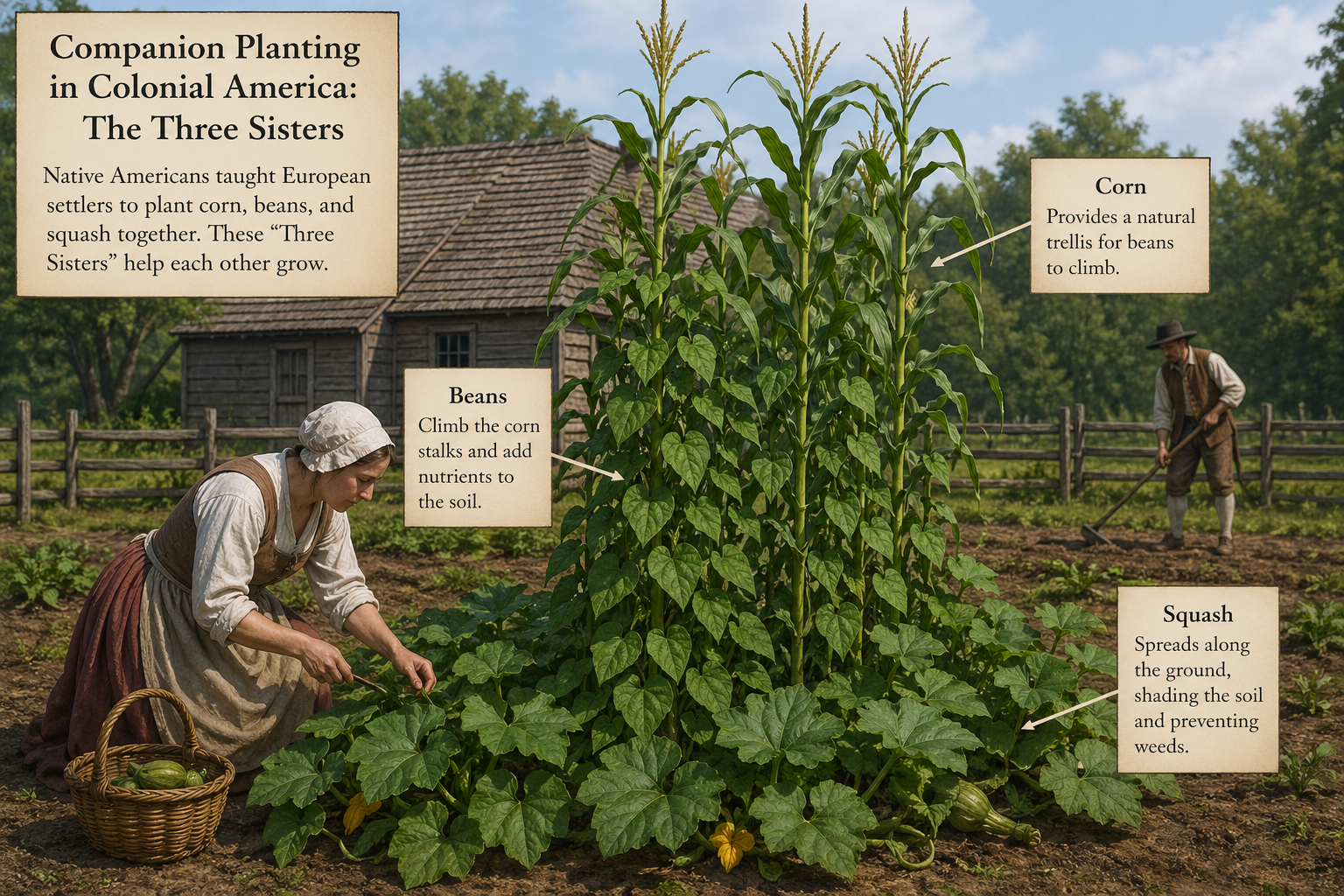 plants. Many beliefs about planting companions have since been passed down through the generations; some more mythological while others have been proven true.
In the New World companion planting was an accepted practice by many farmers and gardeners. The early forms of companion planting were primarily root depth and aerial companionships.
In the early-1800's a few American and European agricultural colleges began studying what was happening in the sub-soil, rather than focusing only on the plants, birthing a new school of study called of study called Soil Science. They learned how the soil's living creatures - bacteria, fungi, protozoa, nematodes and worms - changed the soil's structure and how they benefited the growth and productivity of plants.
By the mid-1800's many other ag schools added Soil Science as a curriculum choice. In addition to the lifeforms in the soil, they learned about the nutrients needed by plants. Those needed in abundance were defined as Macro-nutrients. Those still critical but not used in large amounts were called Micro-nutrients. Others still vital, but used only in tiny amounts, were termed Trace minerals.
 In the early 1900's a new science called Allelopathology (al-lel'-o-path-ah'-lo-gee) was developed. Just like animals, plants take in food and discharge the residue of their digestive process. Some of what they discharge can be helpful or harmful to neighboring plants. This knowledge opened a new avenue of companion planting.
Companion planting has become a significant concern of serious gardeners and many farmers. Today there are three schools of thought about it, and all should be considered when designing your garden.
Types of Companions
Root Depth Companions
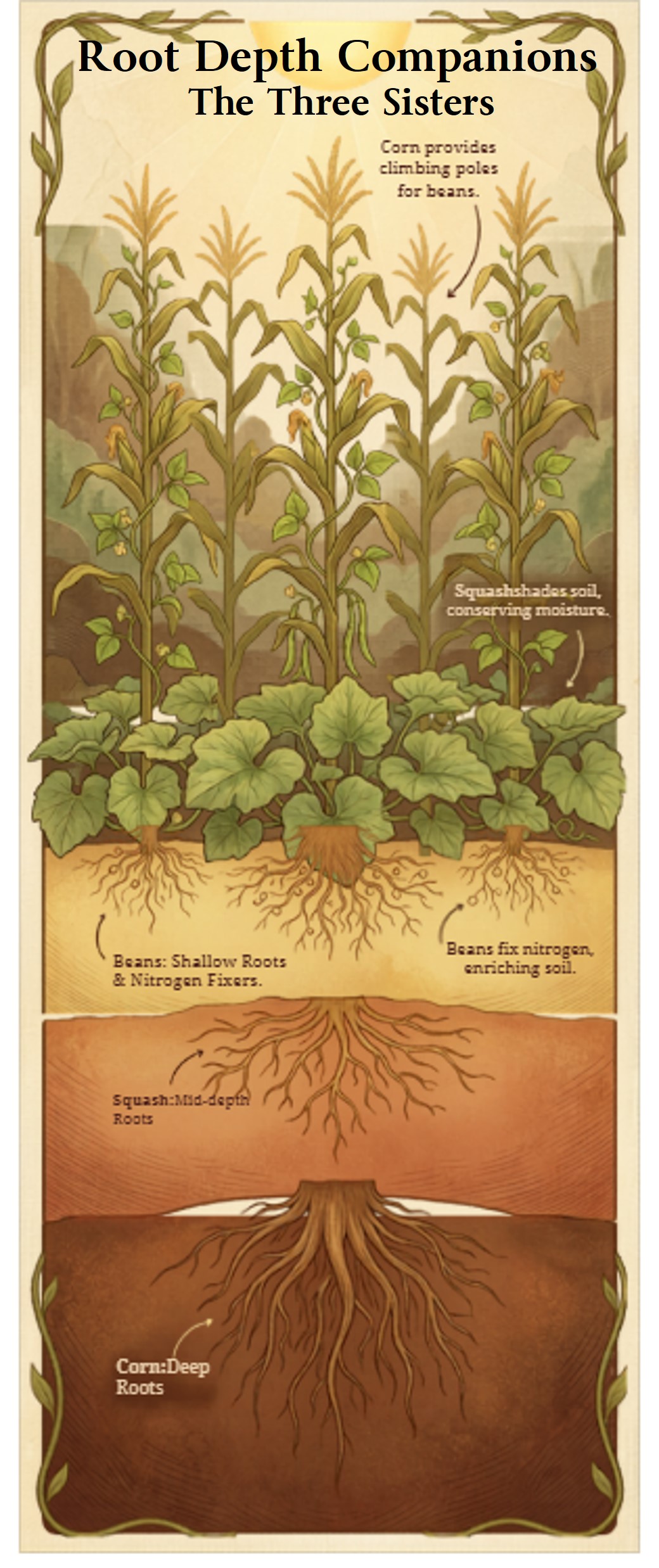 A plant will send roots into fertile soil at least as far down as the height the main body of that plant is above ground. That's true of most plants, including shrubs and trees. Of course, there are exceptions to any rule. Legumes (beans and peas) grow tall but have fairly shallow roots. Conversely, plantain and dandelion are very short above ground, but their roots extend 4' into the soil. Unfortunately for gardeners and farmers, thistle may only get a couple feet tall, but its roots will burrow up to 10' into the soil and spread its roots horizontally 8' in all directions.
When the primary root mass of neighboring plants are at different levels those plants don't compete for nutrients in the same area. These plants can be considered root level companions. A classic example of this is the "three sisters" in Indian gardens. They planted corn (deep roots), squash (mid-depth roots), and beans (shallow roots) together.
The three sisters helped each other above ground, as well. Beans fixed nitrogen in the soil through their roots that benefited both the corn and squash. Corn provided "poles" for the beans to climb, and squash became a living mulch by covering the ground from the hot, drying sun.Rain can leach nutrients to deeper levels below the roots of many of garden plants. Plants with deeper roots draw those nutrients back up from below to benefit the more shallow rooted plants.
 Aerial Companions
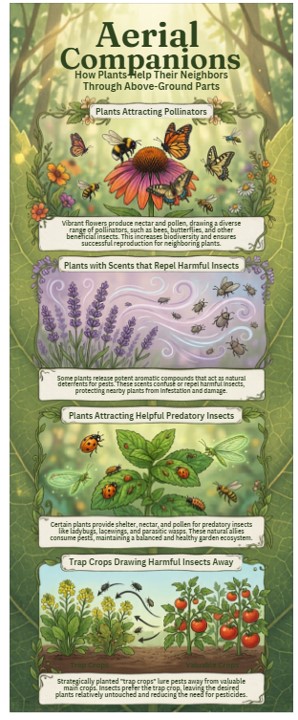
Some plants help their neighbors through their above ground parts. Many attract pollinators. Others have a scent that repels harmful insects. Still others attract helpful insects that prey on harmful insects. A few serve as trap crops, drawing harmful insects to themselves and away from other plants.
Allelopathic Companions
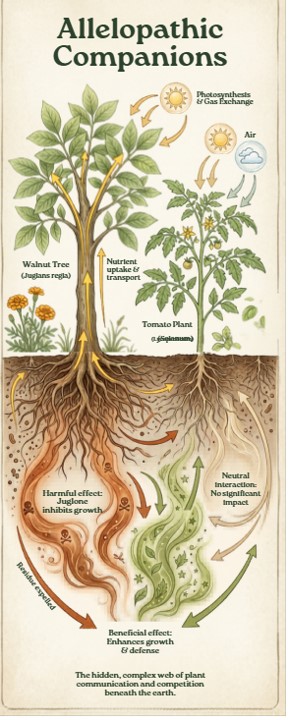 Plants consume nutrients through their leaves and roots. They use those nutrients for their health, growth and productivity. When they have consumed what they need they expel the residue back into the soil through their roots. This residue can be harmful, neutral or beneficial to other plants.
Reviewing Dills Plant Companions
Basil improves the health and flavor of tomatoes when planted beside them (allelopathy). It's scent also repels the Horn worm from tomatoes (aerial). Calendula also repels the Horn worm and attracts pollinators (aerial). Calendula repels bean beetles when grown among bean plants (aerial).
Onions repel many pests, including aphids, carrot flies and white flies (aerial). However, onions should never be planted within a couple feet of legumes (peas or beans), as they stunt the productivity of these plants (allelopathy). Turnips and Rutabaga, though, actually strengthen pea plants (allelopathy).
Marigolds, like onions, can be planted everywhere to deter a great number of harmful insect pests, including cucumber beetles (aerial) and harmful root nematodes (root level). Radishes also repel harmful root nematodes (root level). Zinnia planted around your garden and roses repel Japanese beetles (aerial).
Nasturtiums planted near (but not directly beside) squash will draw squash bugs away from the squash plants (aerial). The leaves, stems, and flowers of Nasturtium are edible, and often added to salads, sandwiches, and stews for a slight peppery bite.
Some plants help our gardens by attracting certain insects. Sunflowers and bright colored flowers attract the tiny predatory wasps and flies that feed on harmful insects (aerial). Also, the roots of deeply rooted plants, like sunflowers, reach 6' to 10' into the earth to pull up nutrients needed by shallower rooted plants (root level). Comfrey also pulls nutrients from deep levels and accumulates them in their leaves (root level). When composted or cut and allowed to decompose on the soil's surface, Comfrey leaves return those nutrients, like nitrogen, phosphorous and trace minerals, back to the upper soil level.
Most vegetables and many herbs and flowers planted within 50 feet of a Black Walnut tree do not produce well (allelopathy). A few exceptions are carrots, beets, onions and corn. Fennel is another negative forthe herb and vegetable garden. It doesn't like other plants near it and will inhibit their growth and productivity (allelopathy).
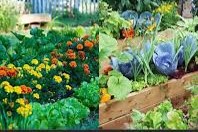 (Companion planting is a science in and of itself for many serious gardeners. It quickly becomes a significant avenue of study)
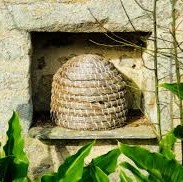 Show Flying Friends You Love Them
Colonial gardeners were pioneers in understanding the importance of pollinators. They often included beehive baskets in their gardens. Bee houses and butterfly palaces were regular features in well kept gardens. Insects have to drink too, but the slick glazing on many water features don't give them a good foothold. A couple stones protruding above the water level in a bird bath give bees, butterflies, and other friendly insects, a place to land for an occasional drink.
What's With All the Gnomes?
Garden gnomes may seem like a modern-day whimsy, but they date back to the mid-1800's Germany where they symbolized protection and prosperity. For similar reasoning they were quickly adopted in England and the United States.Modern gardeners include gnomes to add a playful twist, while subtly nodding to historical beliefs. Gnomes remind us that gardens can be both functional and fun-loving spaces.
Garden Tasks This Month
Be in garden every day. This will help you spot pests and diseases before they get out of hand. It also lets you take care of weeds that pop up before they take over everything. Having a human presence regularly in your garden, and the scent you leave there, helps keep the animals like voles, mice and chipmunks from taking over the space. Be alert for disruptive digging by squirrels, or nest building by rabbits, voles and mice.
 Start saving your paper towel and toilet paper center cardboard rolls for plant guards. Cut the paper towel rolls into quarters. When you put a young transplant into the ground slide one these rolls down over the plant and into the ground by an inch or so.
When cutworms come out at night and crawl across the ground they won't come in contact with your new, tender plants and nip them off at ground level. If the plant is already too tall and bushy to get the rolls down over them, like tomatoes often are, simply slide the roll up over the roots and lower stem of the plant. Plant them into the ground together.
What to Plant This Month
May will probably be your busiest planting month of the year. Not only should you finish planting all your cool season crops, but you will plant your warm season crops, as well.
Cool season crops include, but are not limited to, carrots, beets, turnips, chard, rutabaga, onion sets or bunching seeds, cabbage, lettuce, spinach, and radish. These should all be in the garden by the first week of May. I did not include peas, because they should have been planted in March or very early April.
Warm season crops include those you will plant between mid-May to the end of May. Annual herbs like basil, rosemary, and summer savory, as well as vegetables like peppers, cucumbers, broccoli, cauliflower, squash, parsley, corn and beans, can be planted during the second or third week of May. Calendula, nasturtium, and marigold can also be planted then.
Some plants prefer it to be consistently warmer before going in the ground. Hold off on sunflowers, zinnias, okra and tomatoes until the third to fourth week of May.
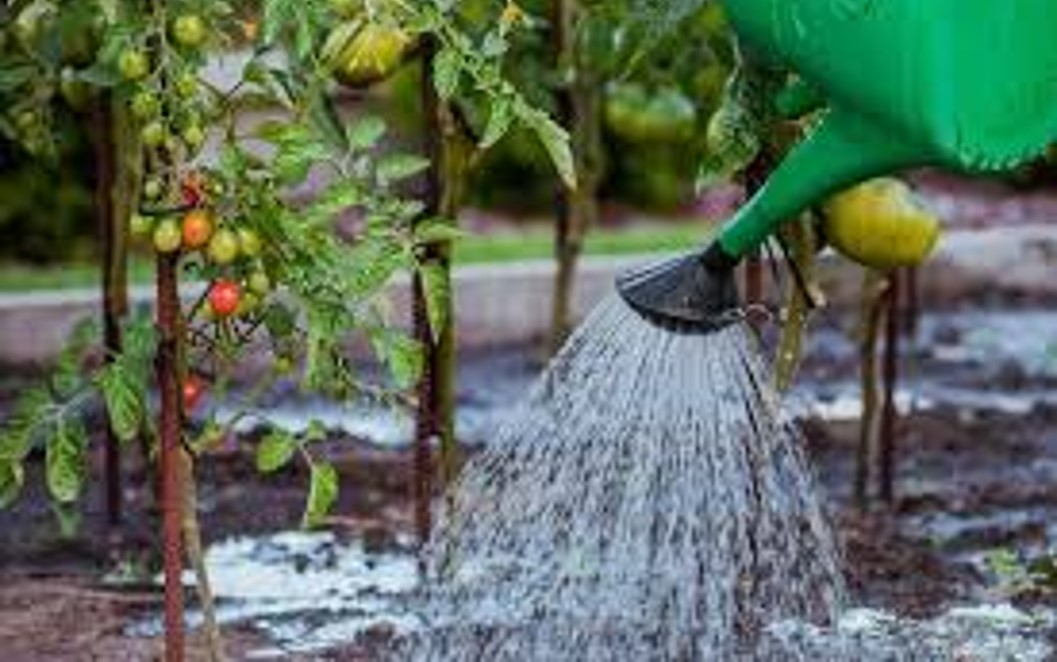 Final Word This Month - Watering
Now that your seeds and transplants are in the ground you need to keep the soil damp. It should never dry out. If it does your seeds and roots will dry and die off.
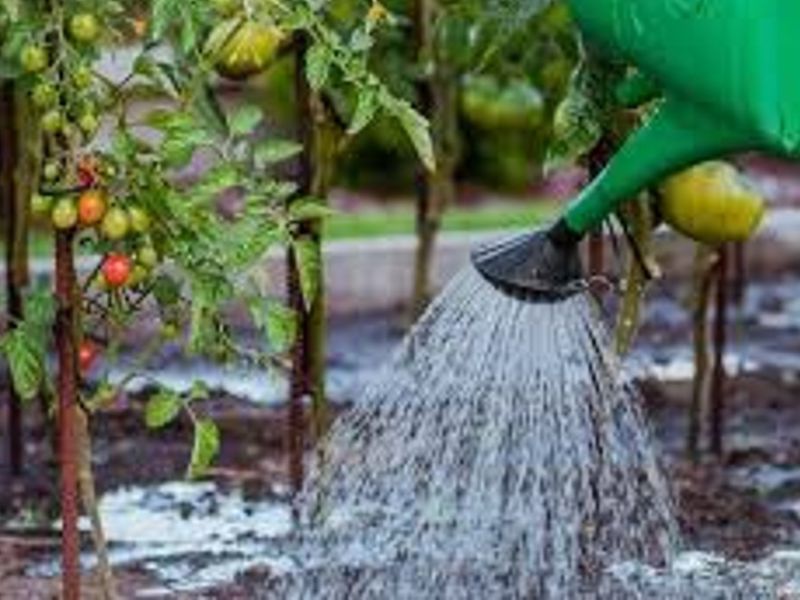
Always water at the ground level, and not down over your plants, called “top watering”. When you top water in the morning most of the water evaporates without ever reaching the soil. In the afternoon sun it will tend to cook your plants. In the evening it frequently causes fungus to attack your plants.
Many people have a habit of watering a little every day. That's okay if you just planted seeds or young transplants. However, when the seeds become plants, and the plants develop a root system, they need more water and down deeper.
It is best to start in the beginning a habit of watering at ground level the equivalent of 3/4” to 1” of rain every three days. Then there will be enough water to seep down to the root level where plants need it. Of course, if it rained 1” yesterday you won't have to water for a couple days, so watch the weather.
By this time next month, you should have a garden well on its way to filling your pantry, herb shelves, and flower vases. Happy Gardening!
Volunteers Welcome!
NYCHAPS (especially Gary!) is always looking for volunteers to assist with garden maintenance. Everything from planting, mulching, weeding, and learning/sharing your knowledge with others! Contact Gary Reneker at This email address is being protected from spambots. You need JavaScript enabled to view it.