
NYCHAPS Rev War Project Vol 1.5
 As early as 1776, France was secretly supporting the colonies in the war with Britain. Many believe that their support of the colonies was much more about aiding any foe of their long-term enemy. Nevertheless, they were secretly providing support. Fearing that France might soon enter the war and combined with the fact that Britain’s economy was still suffering from the debt accumulated in the French and Indian War, many members of the British parliament felt that the rebellion in the colonies must be brought to an end quickly.
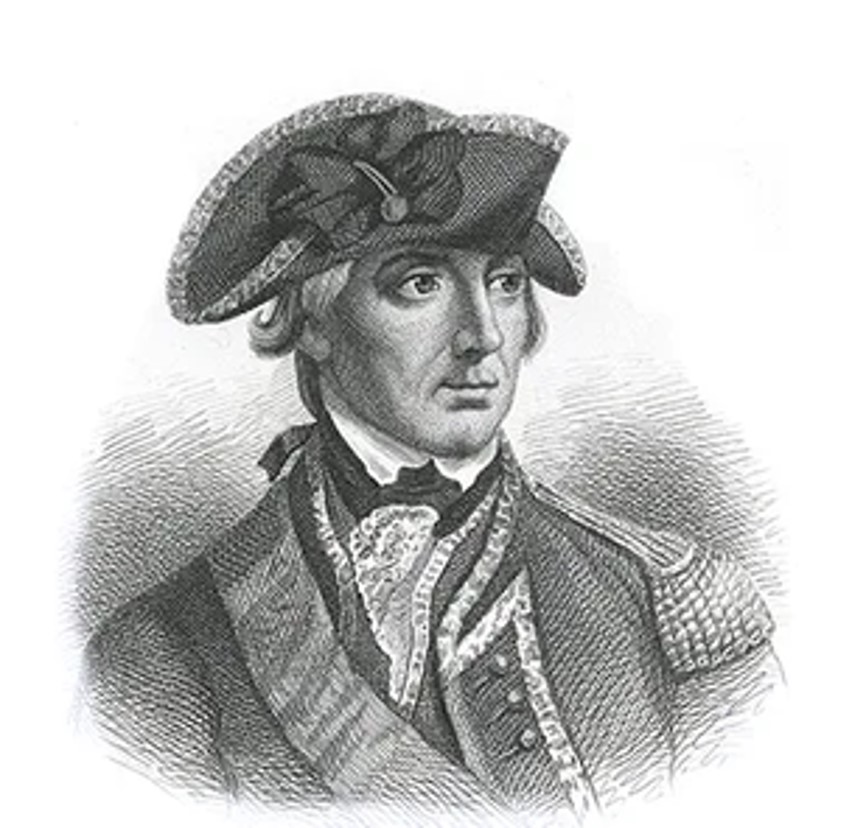
As a result, General William Howe developed a plan to capture the capital of the colonies, Philadelphia, falsely believing this would motivate the colonies to agree to terms of surrender.
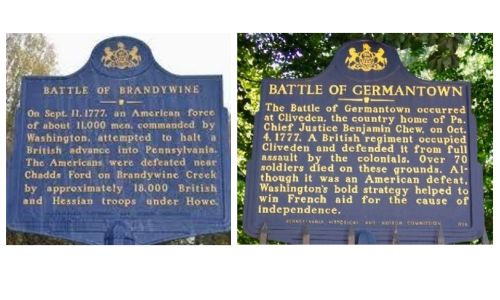
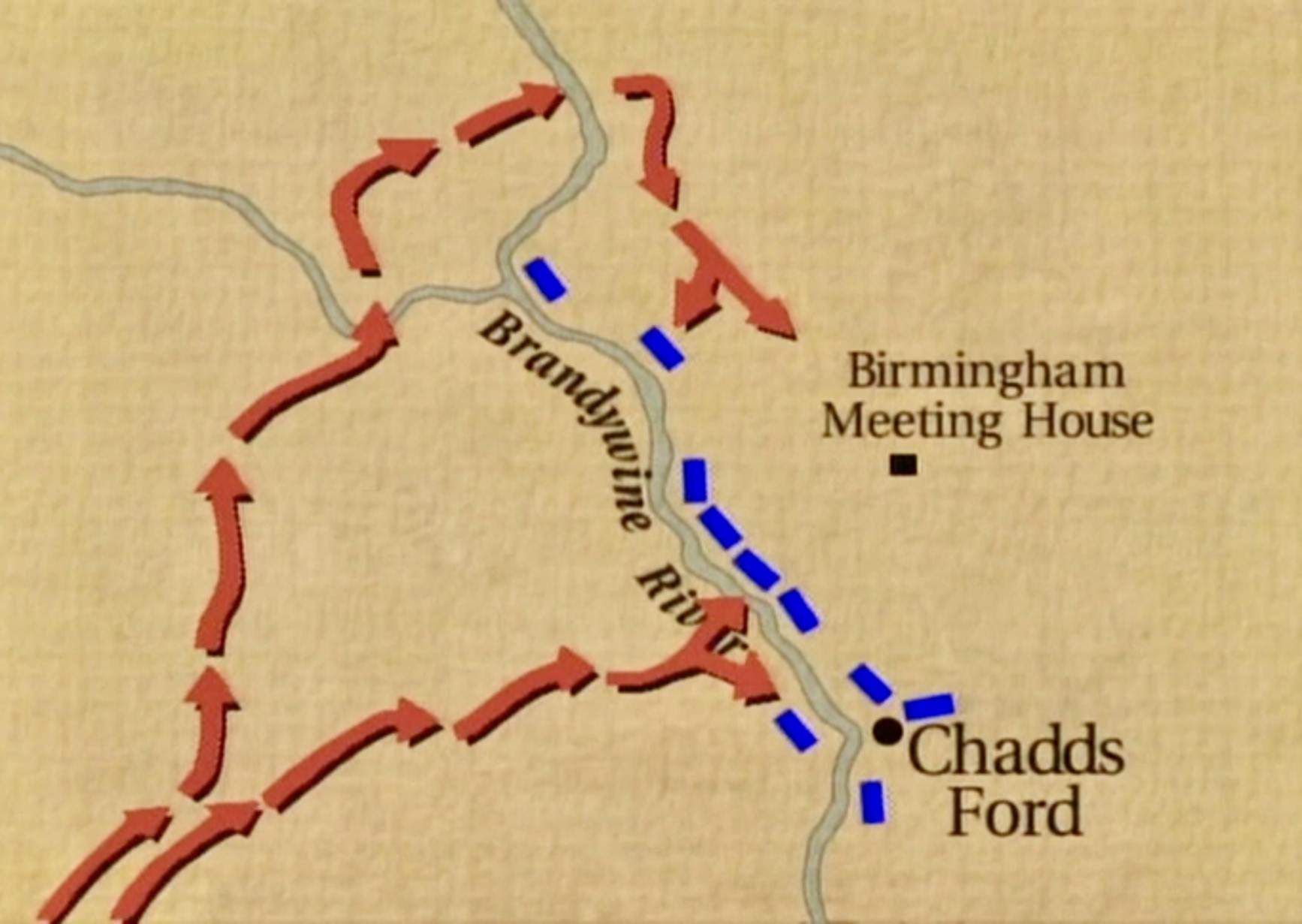
To facilitate the capture of Philadelphia, General Howe sailed his army south from New York to the opening of the Chesapeake Bay in Virginia and then sailed North to land at present day Elkton, Maryland on August 25, 1777. Washington was aware of this maneuver and could have taken advantage of the vulnerability during unloading, however Washington chose to position his forces along the Brandywine Creek at Chadd’s Ford in Delaware County, Pennsylvania, which he incorrectly believed was the only viable place for the British army to cross Brandywine Creek on their way to Philadelphia.
Unfortunately for the colonial troops, General Howe was made aware of another ford north of Washington’s position. Howe split his army and marched some of his troops east as a diversion and then crossed the main portion of his troops at the ford which was unknown to Washington. Howe then marched his troops south and was able to attack the flank of Washington's line. This maneuver by the British allowed them to claim victory at the Battle of Brandywine which occurred on September 11, 1777. However, the morale of the colonial troops remained high because they had fought well and were able to retain their structure in retreat. The troops attributed the defeat to the better knowledge of the topography by the British - most likely a result of aid by Loyalists in the area.
An illustration of the battle lines is below, with Howe’s army indicated in red and Washington’s in blue.
Local ties to this battle include Lt. James Dill, the grandson of Mathew Dill the founder of Dillsburg, who was killed in this battle. The narrative below is attributed to “Family Search”
When James Dill was born in 1748, in Dillsburg, York, Pennsylvania, United States, his father, Col. Matthew Dill Jr, was 22 and his mother, Jean Bracken, was 21. He died on 19 September 1777, in Brandywine Battleground, Chester, Pennsylvania, United States, at the age of 29, and was buried in Brandywine Baptist Church Cemetery, Chadds Ford, Chadds Ford Township, Delaware, Pennsylvania, United States.
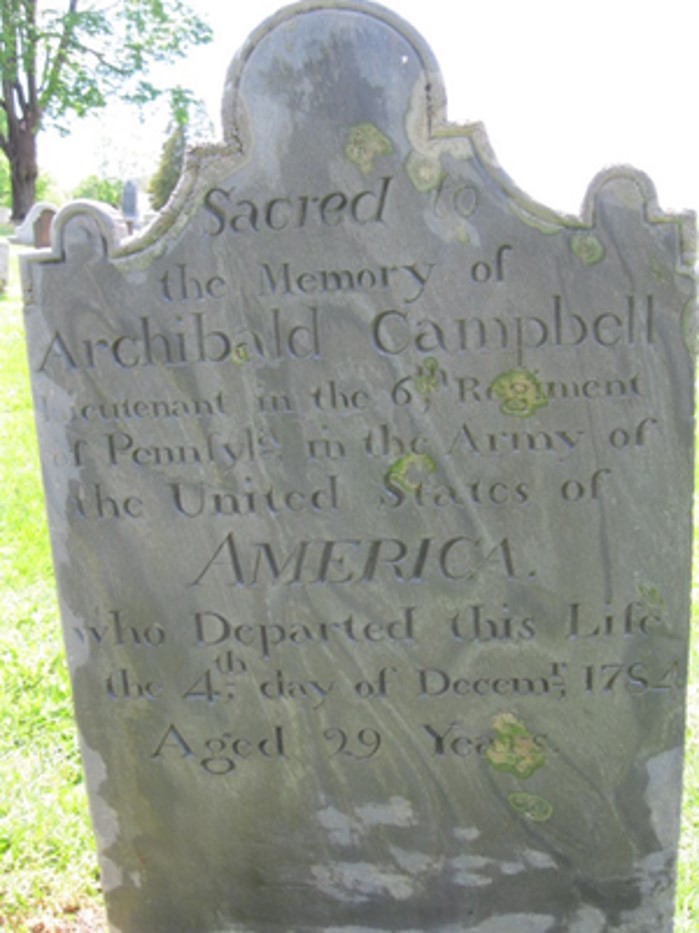 Another local soldier was Archibald Campbell. His obituary attributed his death to the “wound he received at Brandywine and Exposure.” His death date was after the war ended which suggests he had a long and uncomfortable existence after the battle. He is buried in the Dillsburg cemetery.
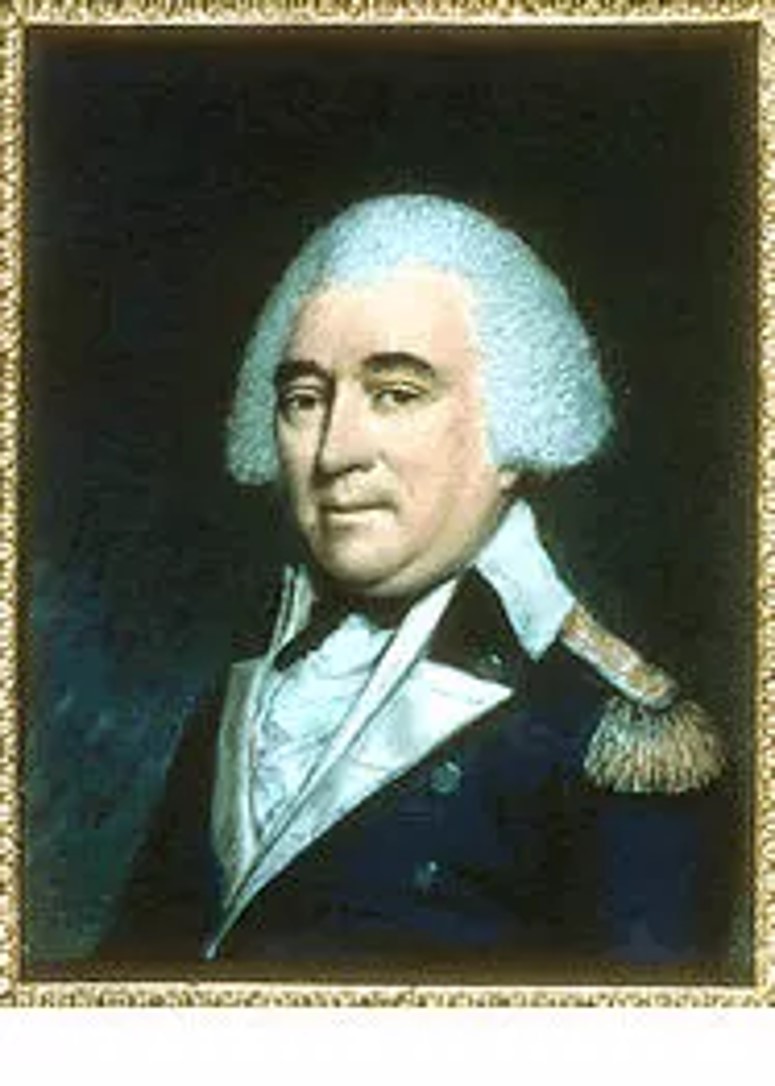 Following Brandywine, Washington left a force behind under the command of Brigadier General Anthony Wayne to monitor and resist the British as they prepared to attack and occupy Philadelphia. On the evening of September 20, British forces led a surprise attack on Wayne's encampment near the Paoli Tavern in present-day Malvern. The assault, carried out with bayonets under cover of darkness, overwhelmed the colonial troops and forced them to retreat with heavy losses. With these British victories at Brandywine and Paoli, Howe had successfully outmaneuvered Washington and marched his troops into Philadelphia on September 26, 1777.
Philadelphia in 1777 was limited to just a small area along the Delaware River with an estimated population of 30 - 40,000, compared to today's 1.5 million. Leaving 3,000 of his troops in the city, Howe then moved the majority of his army to Germantown, a more secure position where he could continue to monitor and pressure Washington’s troops. At the time, Germantown was well outside of the city limits of Philadelphia.
There, Washington again attempted to engage the enemy on October 4, 1777. His strategy called for splitting his forces into 4 columns with 2 trying to gain positions on the flanks of the British army and 2 attacking the front. Many of our local soldiers both in the militia and the Continental line were part of “Mad” Anthony Wayne’s Division.
Some attribute the Colonial Army’s subsequent loss at Germantown to Washington’s plan being difficult to execute with 4 segments of his army attacking at the same time with little ability to communicate, combined with inadequate training for such a difficult attack. Regardless of the root cause, Washington’s troops did have initial success attacking the middle. Unfortunately, they were hampered by thick fog which ultimately ended with 2 segments of Washington’s forces firing on each other in the confusion.
Ultimately, Washington’s army suffered much higher losses than the British. Of the 11,000 men Washington led into battle, 30 officers and 122 men were killed, and 117 officers and 404 men were wounded. Washington then made the decision to move his forces between the British who were in Philadelphia and the new home of the Continental Congress in York, PA. This was Valley Forge.
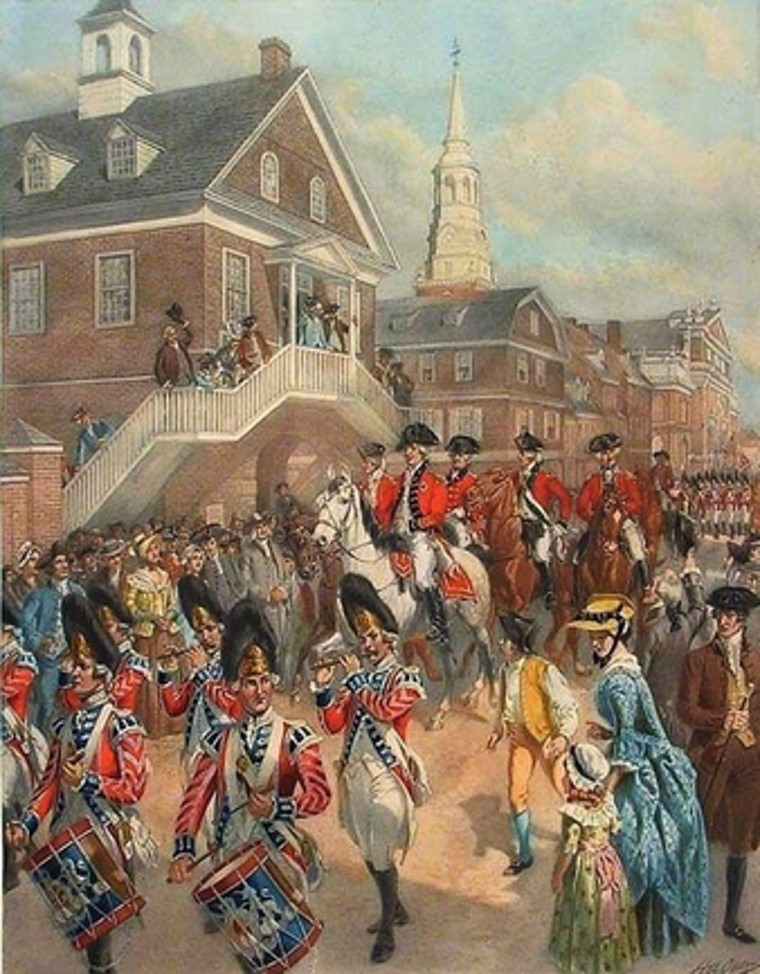 Interestingly enough, while the British initially thought that the colonists and the world would have viewed the occupation of the Capital of the Colonies, Philadelphia, as a decisive victory, the opposite was true. When told Howe had taken Philadelphia, Benjamin Franklin responded that it was more accurate to say ”Philadelphia has taken Howe,” implying that occupying the city had neutralized the army.
While it is impossible to say exactly how many of our local soldiers were engaged in the battles of Brandywine, Paoli, and Germantown, we can say it was more than a few. Many of the York County Militia units were called up at this time. One of our most prominent local soldiers, Thomas Campbell, by now a 2nd Lieutenant in the 4th Pennsylvania Regiment, was at Brandywine and Paoli, and was wounded at the Battle of Germantown. The report says he was shot through the wrist and through the torso and miraculously he survived. We will provide much more on Thomas Campbell in a future article. Thomas Campbell is buried in the Dillsburg cemetery. Suffice it to say Thomas Campbell’s story is miraculous.