NYCHAPS Rev War Project Vol 1.4
By December 1776, the Continental Army was in a state of near despair. British victories at Long Island and across New York and New Jersey had driven Washington’s forces across the Delaware River and into Pennsylvania. Morale was shattered, the army was exhausted, and enlistments were set to expire at the end of the month.
So desperate were the times, that, on December 19, 1776, Thomas Paine was moved to pen his famous lines “ . . . These are the times that try men’s souls . . . ” in his American Crisis No. 1. Indeed, the stakes could not have been higher. In perhaps a last-ditch effort to save the revolution, Washington developed a bold plan to cross the Delaware at three locations and attack the British mercenary force of German Hession forces at the Trenton garrison. As Washington prepared for the coming confrontation, on December 25, 1776, he issued the now‑famous watchword for the operation, “Victory or Death,” encapsulating both the desperation and resolve of the moment.
On Christmas evening, Washington implemented his plan. Over ten hours. Washington, his troops and their artillery made their way across the ice choked river.
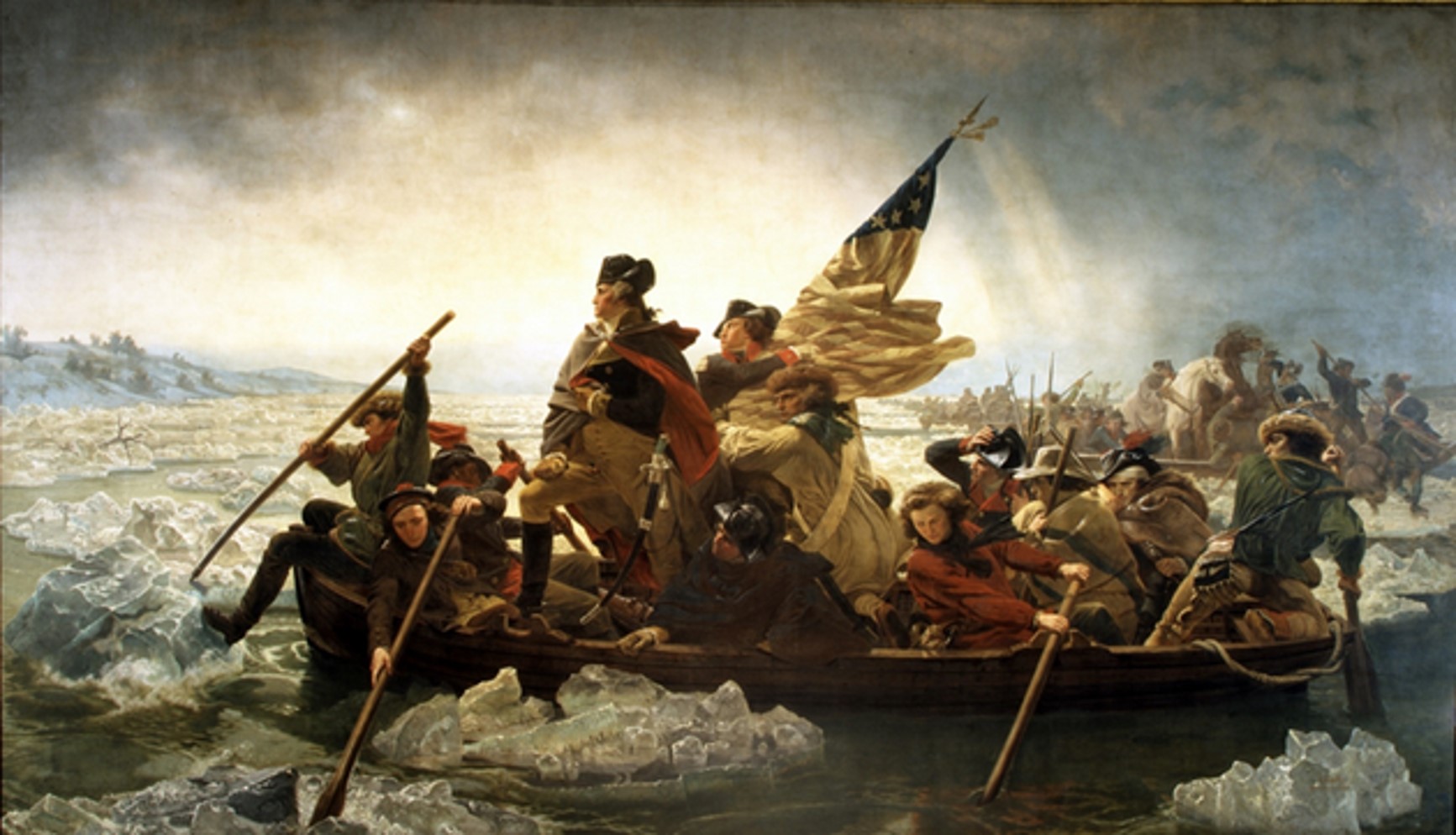
Colonel John Fitzgerald wrote in his diary:
Christmas, 6 P.M….It is fearfully cold and raw and a snow-storm setting in. The wind is northeast and beats in the faces of the men. It will be a terrible night for the soldiers who have no shoes. Some of them have tied old rags around their feet, but I have not heard a man complain….I have never seen Washington so determined as he is now….He stands on the bank of the stream, wrapped in his cloak, superintending the landing of his troops. He is calm and collected, but very determined. The storm is changing to sleet and cuts like a knife…
Like Washington, the 1st Pennsylvania Regiment, including Captain Henry Miller’s Company - the York County unit raised in June 1775 to march to Boston as part of Thompson’s Rifle Brigade - crossed at McConkey’s Ferry north of Trenton in Major General Nathanael Greene’s division. The soldiers then marched southward nine miles through sleet, snow and freezing rain toward Trenton. Washington’s other two forces, expected to cross the river at other points, were defeated by the ice laden river and were unable to cross.
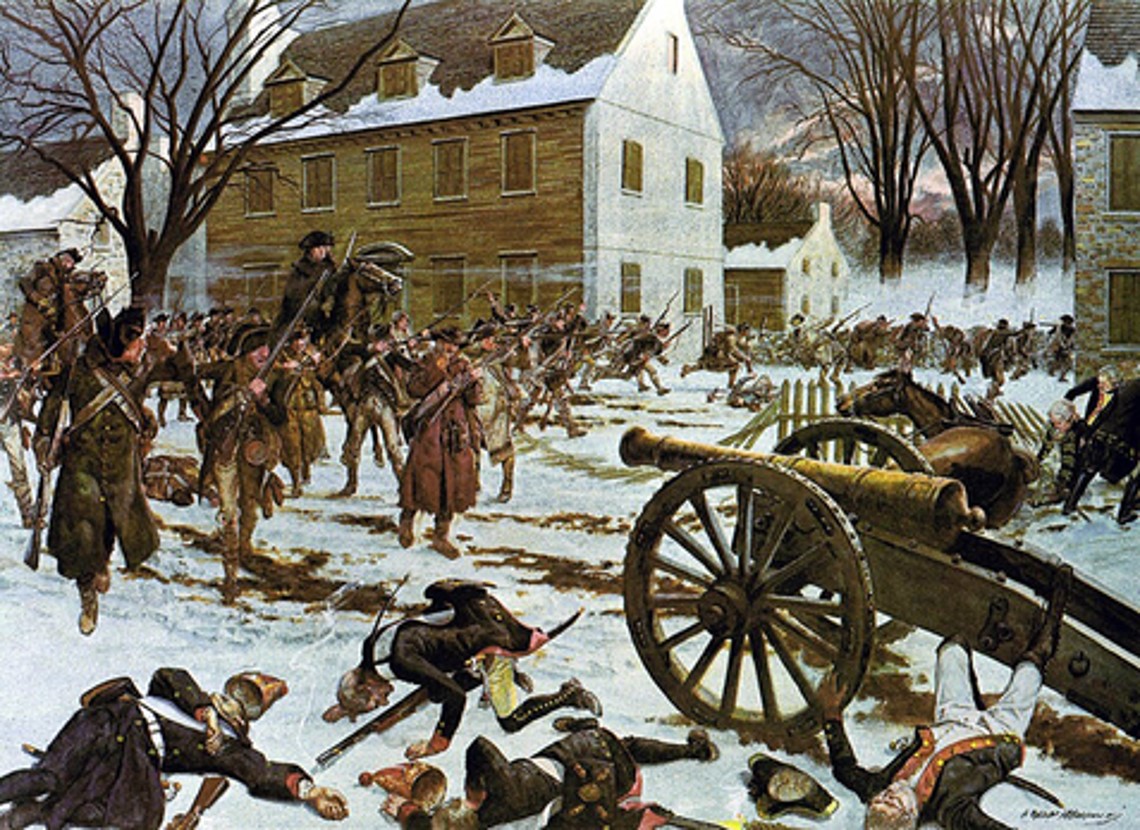 For those marching to Trenton, conditions only worsened, with temperatures dropping sharply after midnight, turning the roads into sheets of ice - two soldiers fell asleep and died from exposure before reaching Trenton. But the soldiers persevered. For the attack, Washington divided his force into two assault wings. The 1st Pennsylvania Regiment advanced with Greene’s division on the northern approach, moving southward toward the town. Taken by surprise through a heavy squall of snow, the Hessian regiments attempted to form but were overwhelmed by converging American fire. As the fighting moved into the center of town, American artillery opened fire down King and Queen Streets, overwhelming the Hessian forces. According to Prowell’s History of York County, Captain Miller wrote of the battle:
Washington desired our regiment to lead the advance, which we did. We formed in line of battle and advanced within sixty yards of the Hessians without firing a gun. We moved with such rapidity and determination that we struck them with terror. The enemy grounded their arms, and 919 Hessians surrendered as prisoners of war.
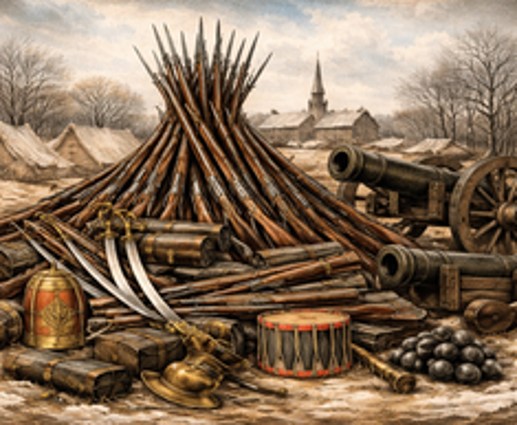 By battle’s end, and in only one hour’s fighting, the Continental Army captured not only the Hessian troops but also a large supply of muskets, bayonets, swords, and cannons. The American forces had won a decisive victory.
While the victory revived American morale, only continued offensive action would sustain momentum. After recrossing the Delaware back to Pennsylvania with prisoners and captured stores, including artillery, arms and ammunition on December 26, Washington returned to Trenton, again recrossing the Delaware, on December 30. His army was now reinforced by additional troops from Pennsylvania and New Jersey and bolstered by the re‑enlistment of many veteran soldiers, persuaded by both Washington’s personal entreaty and the offer of a substantial bonus for a six-week re-enlistment.
On January 2, 1777, British forces under Lt. General Cornwallis advanced from Princeton toward Trenton, planning to attack Washington’s forces. For his part, Washington deployed his army behind the Assunpink Creek, and positioned the 1st Pennsylvania Regiment, along with other troops, halfway between the towns with orders to repel and slow the British advance for as long as possible. Under the leadership of Colonel Edward Hand, firing from cover and inflicting substantial damage throughout the afternoon,, the 1st Pennsylvania Regiment, including Miller’s company, helped delay British progress toward Trenton and Washington’s main army. At times Hand’s troops were outnumbered six to one, but their stubborn fire contributed to the failure of Cornwallis’s three attempts to force a crossing over the Assunpink Creek before nightfall. Then as darkness fell, Washington executed a daring maneuver - leaving campfires burning to deceive the British, he stealthily led his army on a night march around Cornwallis’s flank toward Princeton, leaving the British to wake the next morning to a deserted field. Thus ended the Battle of Assunpink Creek, also known as the Second Battle of Trenton.
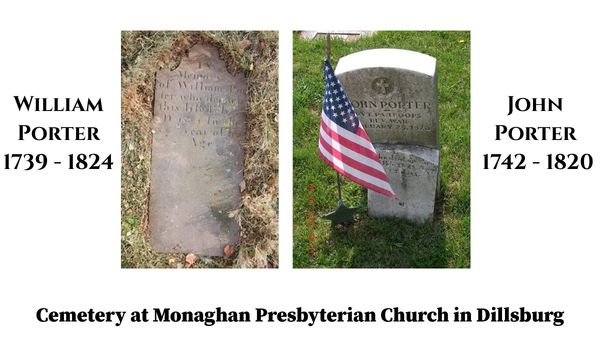
William Porter and his younger brother John Porter, both buried in the Monaghan Presbyterian Church in Dillsburg, were local soldiers at Trenton in December, 1776. According to family history, they were among those left to “guard the camp on the Assunpink while Washington led his troops to Morristown” and while later making their way to Princeton “the two took refuge from rain and sleet under a tree and were standing close together reloading their rifles under the protection of their broad-brimmed hats when a shot from Cornwallis’ retreating riflemen pierced his [William’s] abdomen and rendered him hors de combat” or out of action, but he recovered and continued to serve.
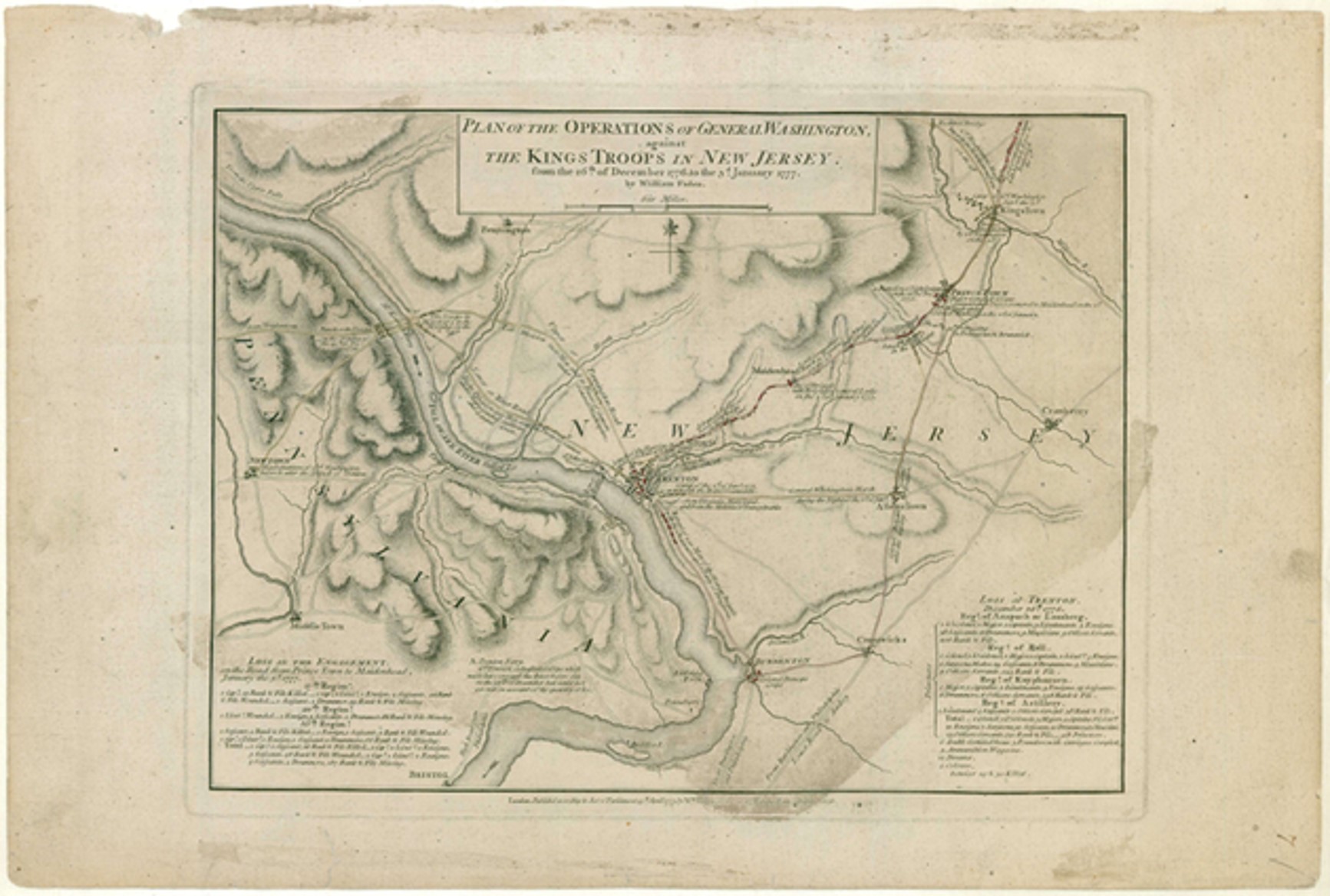
At dawn on January 3, 1777, Washington’s troops marched onward to attack Princeton but encountered British regiments as they neared Princeton. When the initial American advance faltered under British bayonet pressure, Washington arrived on the field, riding within 30 paces of the British line, and stabilized the troops. He then led a general counterattack. The 1st Pennsylvania Regiment were among the many units that surged forward, driving the British soldiers from the field. They then pursued the British when its line eventually broke, taking most of the prisoners captured that day. After the victory at Princeton, Washington marched his army north to Morristown, establishing winter quarters there. An overview map of the battles is below.
While the victory revived American morale, only continued offensive action would sustain momentum.After recrossing the Delaware back to Pennsylvania with prisoners and captured stores, including artillery, arms and ammunition on December 26, Washington returned to Trenton, again recrossing the Delaware, on December 30. His army was now reinforced by additional troops from Pennsylvania and New Jersey and bolstered by the re‑enlistment of many veteran soldiers, persuaded by both Washington’s personal entreaty and the offer of a substantial bonus for a six-week re-enlistment.
Within this campaign, Captain Henry Miller’s York County company of in the 1st Pennsylvania Regiment were consistently engaged. Members of the company from Northern York County during this period included Thomas Campbell (later promoted to captain), John Bell, William Cooper, George Dougherty, James Smith and John Taylor. Captain Miller was subsequently promoted to Major on March 12, 1777.
Ultimately, these Ten Crucial Days - December 25, 1776 to January 3, 1777 – were vital to the American cause. They restored morale, revived enlistments, and demonstrated that the Continental Army could defeat professional British and Hessian troops in open battle – a decisive turning point of the Revolution.
Other York County and Pennsylvania Continental, Militia and Flying Camp troops also participated in these battles – there were Pennsylvanians in the Continental German Regiment under Colonel Haussegger, which was sometimes partnered with Colonel Hand’s 1st Pennsylvania Regiment, and the York County Militia under Colonel Richard McAllister (from the Flying Camp) was with Brigadier General Ewing as part of the South Trenton force on January 1, 1777.
To learn more about the Battles of Trenton and Princeton, read “Washington’s Crossing” by David Hackett Fischer, or visit The Trenton-Princeton Campaign | George Washington's Mount Vernon or Home - Princeton Battlefield Society.
To learn more about the Pennsylvania Continental troops in general, see “The Pennsylvania Line: Regimental Organization and Operations, 1775-1783” by John B. B. Trussell.